|
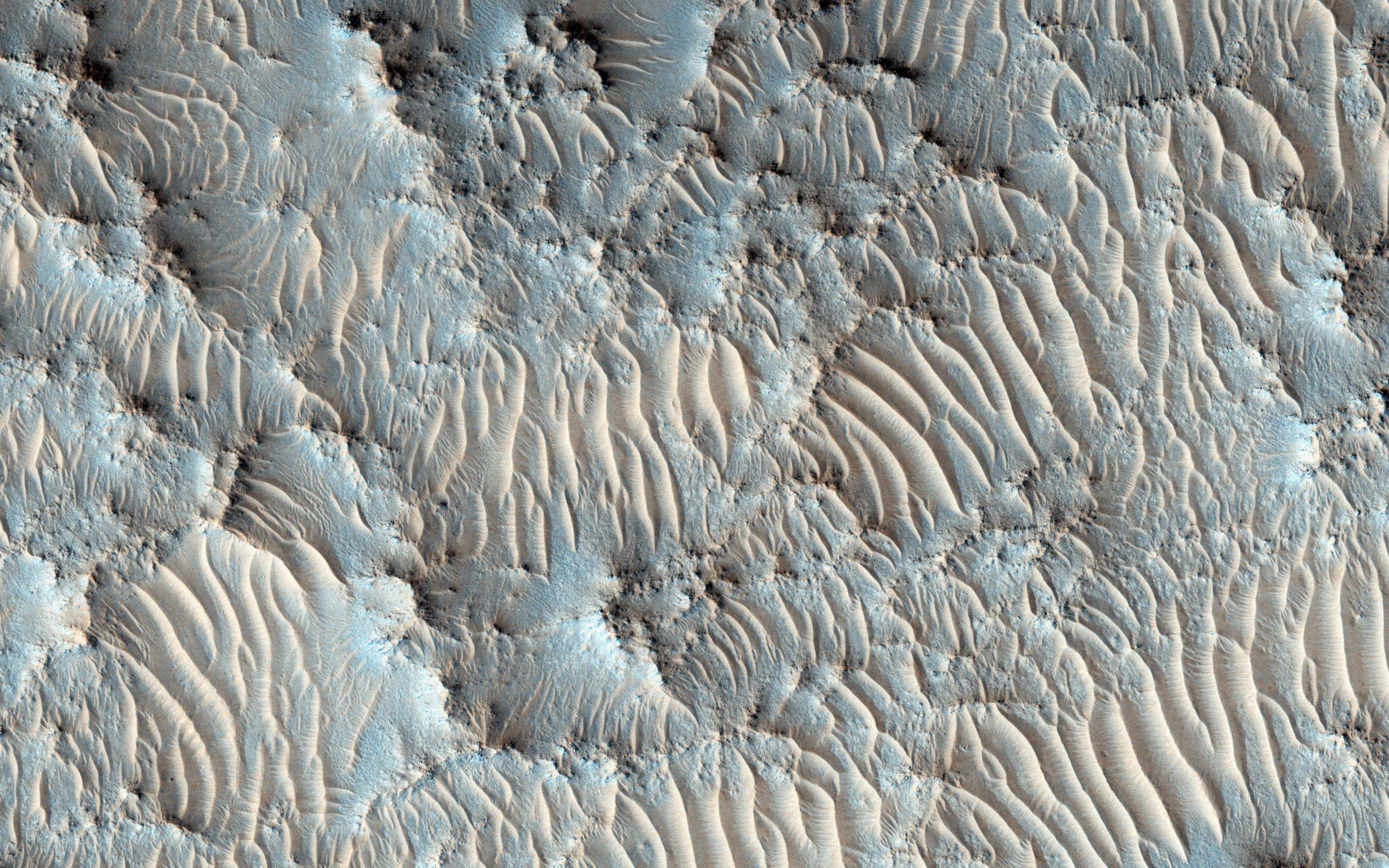
A Possible Landing Site for the 2020 Mission: Jezero Crater
- Click the image above for a larger view
- Full-Res JPEG (2880 x 1800) (1.1 MB)
- Full-Res TIFF (2880 x 1800) (15.6 MB)
Caption:
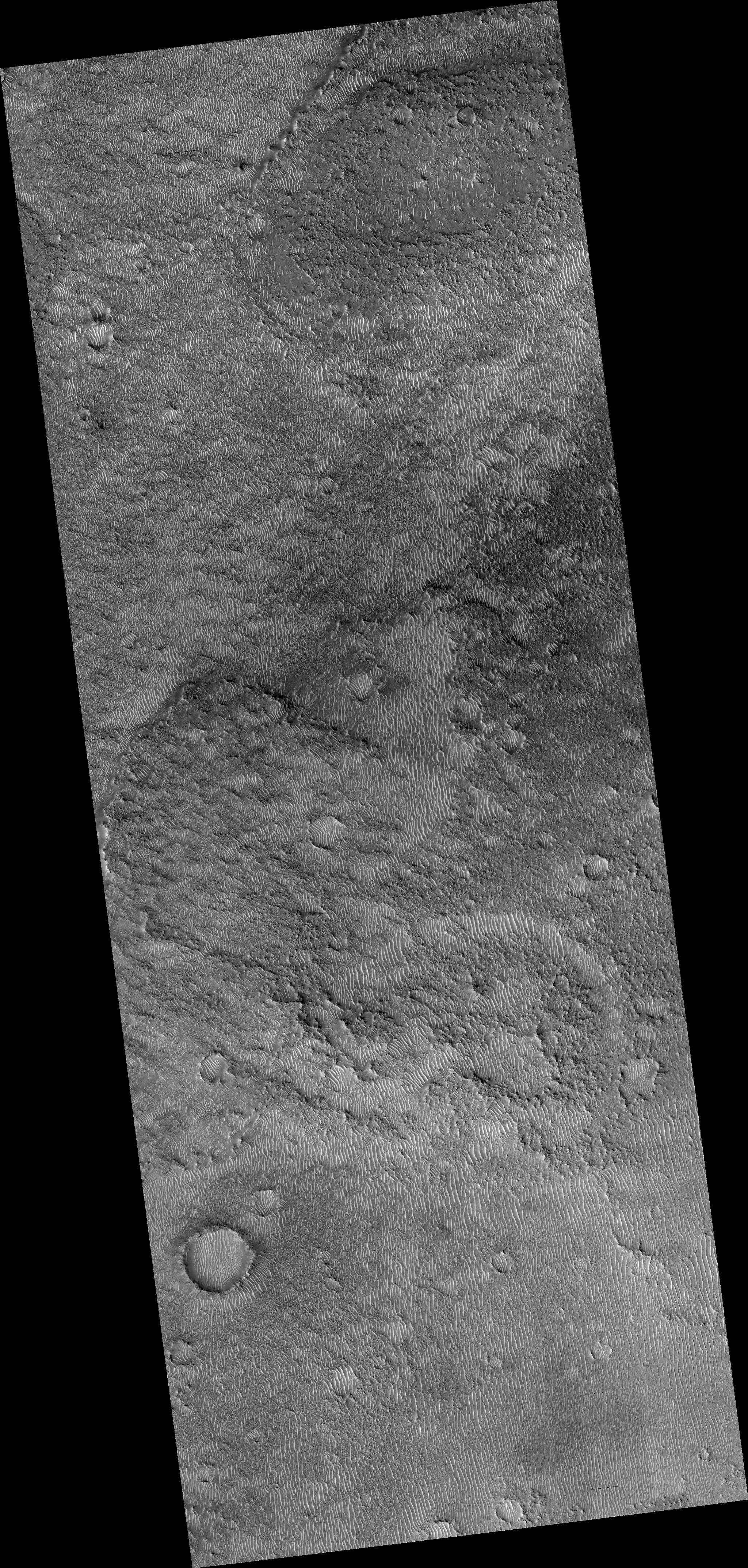
Map Projected Browse Image
Click on the image for larger version
It's not only when trying to find a scientifically interesting place to land that the high-resolution images from HiRISE come in handy: it's also to identify potential hazards within a landing ellipse.
This is one of the trickier aspects of selecting landing sites on Mars: a place to do good science but also where the risks of landing are low. Jezero Crater is an ancient crater where clay minerals have been detected, and with a delta deposit indicating that water was once flowing into a lake. Since clays form the in presence of water, this crater would be a very good candidate for a lander to explore and build on what we've learned from the Mars Science Laboratory. Could some form of ancient life have existed here and for how long?
This is a stereo pair with ESP_039203_1985 .
Background Info:
The University of Arizona, Tucson, operates HiRISE, which was built by Ball Aerospace & Technologies Corp., Boulder, Colo. NASA's Jet Propulsion Laboratory, a division of the California Institute of Technology in Pasadena, manages the Mars Reconnaissance Orbiter Project for NASA's Science Mission Directorate, Washington.
Cataloging Keywords:
| Name | Value | Additional Values |
|---|---|---|
| Target | Mars | |
| System | ||
| Target Type | Planet | |
| Mission | Mars Reconnaissance Orbiter (MRO) | Mars Science Laboratory (MSL) |
| Instrument Host | Mars Reconnaissance Orbiter | Curiosity Rover |
| Host Type | Orbiter | Rover |
| Instrument | High Resolution Imaging Science Experiment (HiRISE) | |
| Detector | ||
| Extra Keywords | Color, Crater, Map, Water | |
| Acquisition Date | ||
| Release Date | 2015-03-04 | |
| Date in Caption | ||
| Image Credit | NASA/JPL-Caltech/University of Arizona | |
| Source | photojournal.jpl.nasa.gov/catalog/PIA19303 | |
| Identifier | PIA19303 | |